
Puppy Go Home Day What to Expect in the First Weeks at Home
Bringing a puppy home is exciting, but it is also a big life change for a very young dog. One day they are with their littermates, their breeder, familiar smells, and a routine they know. The next day they are in a new home with new people, new sounds, new rules, and a new sleeping space.
That is a lot for a puppy to process.
The first couple of weeks are an adjustment period. Some puppies bounce in like they own the place. Others are quiet, clingy, unsure, or a little off their normal routine. Both can be normal. The goal during this stage is simple: keep your puppy safe, help them eat and drink well, protect their health, and build trust through a calm routine.
This guide walks through what to expect on Puppy Go Home Day and during the first weeks after bringing a puppy home from a breeder.

The first day home should be calm and simple
Go Home Day is emotional for everyone. The puppy is leaving the only home they have known, and the new family is eager to play, cuddle, and introduce them to everything. As tempting as that is, the best first day is usually a quiet one.
Keep the day low-key. Skip large gatherings, extra visitors, and a full tour of the house. Your puppy does not need to meet every neighbor, relative, and family friend right away. They need to learn where they sleep, where they potty, where their food and water are, and who will care for them.
Set up a small, safe area before the puppy arrives. This may include:
A crate or sleep area
Fresh water
The same food the breeder has been feeding
A few safe puppy toys
A washable blanket or bed
Cleaning supplies for accidents
A designated potty area at home
If your breeder sends home a blanket or toy with the scent of the litter, use it. Familiar smells can help a puppy settle.
The car ride home can also be stressful. Some puppies sleep the whole way. Others drool, whine, or get carsick. Bring towels, wipes, and a secure crate or carrier. Avoid stopping at public dog areas on the way home unless there is a true need. If a potty break is necessary, choose a clean, low-traffic area and carry your puppy if vaccination status is not complete.
Once home, let your puppy potty in the designated area, then give them time to explore a small part of the house. Keep it gentle. Speak softly. Let them come to you. Avoid overwhelming them with too much attention all at once.
Eating and drinking are top priorities
A new puppy may not eat much right away. Stress, travel, excitement, and a new environment can all affect appetite. That said, young puppies need regular food and water. Their bodies are small, and they do not have the same reserves as adult dogs.
Start with the food the breeder has been feeding. A sudden food change can cause stomach upset, loose stool, or refusal to eat. If you plan to switch foods, wait until your puppy has settled in and ask your veterinarian how to transition gradually.
Offer meals on the schedule recommended by the breeder or your veterinarian. Most young puppies need multiple meals per day. Place the food in a quiet spot and give the puppy time to eat without pressure.
Watch for these signs that your puppy is doing well:
They eat at least some of their meals
They drink water during the day
They have normal energy for short puppy bursts
They are alert when awake
They are having bowel movements and urinating
Some puppies eat better if the food is slightly softened with warm water. Others need a quieter room with fewer distractions. If your puppy skips a meal but is still drinking, playful, and bright, it may simply be adjustment stress. If they refuse multiple meals, seem weak, vomit, have diarrhea, or will not drink, call your veterinarian promptly.
Do not wait several days to see if a very young puppy improves on their own. Puppies can decline quickly when they are not eating or drinking.
Water should always be available during waking hours. You can manage timing near bedtime to help with overnight potty needs, but puppies should never be restricted from water for long periods unless your veterinarian gives specific instructions.

A vet exam within three days protects your puppy
A proper veterinary exam should happen within 3 days of bringing your puppy home, unless your breeder or contract requires an even sooner visit. This visit is not just a formality. It gives your veterinarian a chance to check your puppy’s overall health soon after arrival.
At the first exam, the vet may review:
Weight and body condition
Heart, lungs, eyes, ears, teeth, and bite
Skin and coat
Hydration
Stool health and parasite concerns
Vaccine records from the breeder
Deworming history
Microchip information, if applicable
Feeding plan
Potty training and crate training questions
Bring all paperwork from the breeder. This may include vaccination records, deworming dates, registration information, microchip details, health guarantee paperwork, and feeding instructions.
If your breeder has a health guarantee, read it carefully before the appointment. Many breeder contracts require a vet exam within a certain number of days after pickup. Missing that window may affect the guarantee.
This appointment is also the time to ask about your puppy’s vaccination schedule. Puppies usually need a series of vaccines over several weeks. Your veterinarian will tell you when your puppy is considered fully vaccinated and what activities are safe before that point.
This post is for general information only and does not replace veterinary care. Always follow your veterinarian’s guidance for your puppy’s age, breed, health history, and local disease risks.
Keep feet off public ground until fully vaccinated
One of the most important rules during the first weeks is also one of the easiest to overlook: no feet on the ground in public places until your puppy is fully vaccinated.
That means your puppy should not walk in areas where unknown dogs may have been, such as:
Pet store floors
Dog parks
Public parks
Sidewalks with heavy dog traffic
Rest areas
Apartment dog potty zones
Training facility floors unless they have strict vaccine and cleaning policies
Veterinary clinic parking lots
This does not mean your puppy must live in a bubble. Socialization matters, but it must be done safely. Until vaccines are complete, carry your puppy in public, use a stroller, hold them in your arms, or invite healthy, vaccinated dogs to visit your home if your veterinarian says it is appropriate.
At home, your puppy can place their feet on the ground in your own yard or designated potty area, assuming it is private and not used by unknown dogs. If you live in an apartment or shared housing, ask your vet for the safest potty plan. A clean indoor potty station, grass patch, or washable pad setup may be better during the early vaccine period.
The goal is to protect your puppy from preventable illness while still exposing them to normal life in a safe way.
Safe early experiences can include:
Hearing the vacuum from another room
Watching cars from your arms
Meeting calm visitors at home
Sitting in a parked car for a few minutes
Being gently handled for brushing and nail checks
Hearing household sounds like the dishwasher, TV, and doorbell
Watching the world from a clean blanket in your lap
Keep these sessions short and positive. A tired or frightened puppy is not learning confidence. They are learning that the world feels too big.
The first two weeks are an adjustment period
Many new puppy owners worry when the first nights are not smooth. The puppy cries in the crate. They have accidents. They bite pant legs. They play wildly for 10 minutes, then collapse into sleep. They seem confident one hour and unsure the next.
This is normal puppy adjustment.
Your puppy is learning:
Where to sleep
Where to potty
Who feeds them
What sounds are normal
What happens when they are alone
How to ask for help
What the household routine feels like
A predictable routine helps more than constant correction. Puppies thrive when they know what comes next.
A simple daily rhythm may look like this:
Wake up and go potty right away
Eat breakfast
Go potty again shortly after eating
Short play session
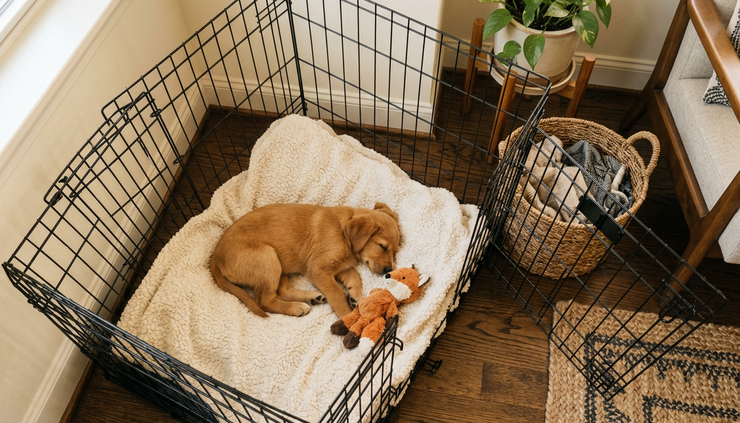
Nap in crate or safe pen
Potty after waking
Repeat through the day
Young puppies usually need to potty after sleeping, eating, drinking, playing, and excitement. Take them out often. Praise calmly when they go in the right place. If they have an accident, clean it with an enzymatic cleaner and move on. Punishment after the fact does not help. It only teaches the puppy to be nervous around people.
Crate training should feel safe, not scary
A crate can be a helpful tool, but it should not be used as punishment. Make it comfortable and positive. Feed meals near or inside the crate. Toss treats inside. Let your puppy rest there when they are sleepy.
The first few nights may be noisy. Some puppies cry because they need to potty. Others cry because they are lonely or unsure. Take young puppies out for a quiet potty break when needed, then return them to their sleep area without turning it into playtime.
Keep nighttime boring and predictable. Dim lights, quiet voice, quick potty, back to bed.
Puppy biting is normal but needs guidance
Puppies explore with their mouths. They bite hands, sleeves, hair, shoelaces, and anything that moves. This does not mean your puppy is aggressive. It means they are a puppy.
Redirect biting to proper chew toys. If the puppy gets too wild, they may need a nap. Many puppies bite more when they are overtired.
Good chew options should be puppy-safe and size-appropriate. Avoid anything too hard, too small, or easy to swallow. Ask your veterinarian if you are unsure.
Watch for signs that something is wrong
Most puppies need time to settle, but some signs should not be brushed off as normal adjustment. A new puppy can become sick quickly, especially if they are not eating, drinking, or keeping food down.
Call your veterinarian if you notice:
Refusing food for more than one meal, especially with low energy
Not drinking water
Repeated vomiting
Diarrhea, especially watery or bloody stool
Extreme sleepiness or weakness
Coughing or difficulty breathing
Pale gums
Straining to urinate or not urinating
A swollen or painful belly
Limping or signs of injury
Constant crying that does not improve with potty breaks, food, comfort, or rest
Trust your instincts. If your puppy seems “off,” it is better to call the vet and ask. Early care can make a major difference.
Also contact your breeder if there is a health concern soon after pickup. A responsible breeder will want to know how the puppy is doing and may have helpful background information for your veterinarian.
Keep training gentle and age appropriate
The first weeks are not about perfect obedience. They are about trust, routine, and communication. Your puppy is a baby. They are capable of learning, but they cannot act like an adult dog yet.
Focus on a few simple habits:
Coming when called in a happy voice
Responding to their name
Settling briefly in a crate or pen
Following a treat lure
Allowing gentle handling
Going potty in the right area
Learning that human hands are kind and safe
Keep sessions short. A few minutes is enough. End while the puppy is still interested.
Use praise, food rewards, toys, and calm encouragement. Avoid harsh corrections, yelling, leash pops, or anything that scares the puppy. Fear can slow learning and damage trust.
House rules should still be consistent. If the puppy will not be allowed on the sofa as an adult, start that habit now. If jumping is not allowed, teach four paws on the floor from the beginning. Consistency does not have to be harsh. It just needs to be clear.
The first weeks set the tone for a lifetime
The first few weeks at home are full of small moments that matter. The first meal. The first vet visit. The first night in the crate. The first successful potty trip. The first time your puppy looks to you for comfort.
Keep your expectations realistic. Your puppy may have accidents. They may cry at night. They may skip part of a meal, chew the wrong thing, or seem unsure in a new room. That does not mean anything is going wrong. It means they are learning how to live in a brand-new world.
The most important things are steady care and close observation:
Make sure your puppy is eating and drinking
Schedule a vet exam within 3 days of coming home
Keep public outings safe until fully vaccinated
Use the breeder’s food at first
Build a calm routine
Give plenty of naps
Keep training gentle and clear
Call your vet if anything seems concerning
Puppies do not need a perfect first week. They need a safe one. With patience, structure, and good veterinary care, the uncertain little puppy who came home on Go Home Day will soon begin to relax, trust, and show their true personality.


Comments